Austin Tri-Cyclist Blog

Showing posts with label Tech / Informative. Show all posts

Friday, January 2, 2015

Tips for Commuting

By Kat Hunter


Bike messenger Sammi Runnels, photo courtesy of Patchen Preston
Austin is a good city for bike commuting. The weather is usually warm and dry, bike lanes or neighborhood streets can get you from one end of the city to the other, and workplace culture is generally accepting of the practice. Getting around by bike does have its drawbacks, of course—Austin’s traffic is legendary, the weather is boiling hot for much of the year, and some bike routes stop and start like a jigsaw puzzle that doesn’t quite fit together. But a little preparation goes a long way. ATCers offer bike-commuting tips and equipment ideas to make your trip a smooth one.


Equipment:

The first thing any veteran bike commuter tells you is to get a good set of front and rear lights. Options range widely in price, but high-quality lights are usually well worth the investment—consider battery life, brightness, charging and attachment options, and any other aspects that might pay off long term in general convenience and usability. For extra safety, run your lights even in the daytime, especially in low light or rainy conditions. When riding pre-dawn, I like using a bike-mounted Light & Motion front and rear and also a helmet-mounted front and rear; I feel extremely visible, and the front lights illuminate a wide swathe of road in front of me.

Cannondale Quick QR Expanding Pannier
Consider how you’re going to be storing your bike once you get to your destination. Some offices and shops are particularly nice about letting you prop your bike up inside, but it’s better to ask in advance. If you’re locking it up outside, you might want to ride an inexpensive bike that doesn’t tempt would-be thieves. Cables are light but can be cut easily, so heavy-duty U-locks offer more protection.

Durable tires like Gatorskins can prevent flats that might delay your trip.

Much more forgiving and comfortable for long rides than a backpack, baskets or racks can help you carry a surprising amount of gear, from textbooks to heavy shoes. Panniers are awesome for grocery shopping. In addition to what you can fit inside (which is a lot), you can use reusable bags to tie light purchases like potato chips and bread to the outside.


Clothing:

Cannondale Pack-Me Jacket
Sammi Runnels, who spends most of her day riding downtown as a bike messenger for Dropoff and has been a bike commuter for five years, says if you ride more than ten miles you’ll probably want some kind of cycling clothing, whether it’s mountain bike baggys or spandex. Long skirts or baggy pants are generally a bad idea, and tight jeans or short shorts should be avoided for anything more than three miles. She says she likes tight knee-length pencil skirts because they don’t fly up, but for flowy skirts, a pair of tight boxers or spandex shorts underneath are an easy solution. Roll your pant leg up on the drive-train side to prevent catching the material in your chain. Also secure loose shoe laces, which can make for an especially bad mishap on a fixed gear.

For cold weather, having the right layers on hand can make your trip much more pleasant. Wind-stopping base layers, long pants or knee warmers, arm warmers, gloves, a vest or jacket, wool socks, shoe booties, a hat or warm headband—all of the above are worth their weight in gold when temperatures suddenly drop. Just ask any bike racer who competed the second day of La Primavera Lago Vista last year, when temps went from 70 degrees to 40 in about an hour.


Helpful preparations for work commuting:

Pack baby wipes. In addition to sweat and general road grime, they’re great for removing chain grease. If your workplace doesn’t have a shower, this is a good way to avoid stinking up the office.

Keep a stash of clothes at your destination. If you occasionally drive to your workplace, use it as an opportunity to drop fresh clothes, shoes, and toiletries off so that you don’t have to carry them each day.

Arrive to work first. Even in Austin, sometimes bike commuting is frowned upon and considered unprofessional. If you're routinely the first to arrive at the office, the idea can go over better with colleagues.


Route & general riding tips:

Don’t commute on high-traffic roads. Often there’s no need to ride on roads like First Street and North Lamar; though they may be slightly less direct, there are much safer, quieter routes if you do your research on Google Maps or Austin bike maps. Test out your route on a weekend or a day when you have plenty of time to get to your destination so that you’re able to experiment. If you can get connected with an experienced commuter to help you plan out your route, even better.

Take the full lane. Sometimes this is a judgment call, but it's a good rule of thumb to start with. If your route includes roads where there are no bike lanes and the roadway is too narrow to be shared safely by both bike and car, ride near the middle of the lane to stake out your territory. This decreases the chances of being buzzed by a driver who believes he or she can squeeze by.

Pay attention. People make mistakes in traffic, and whether you’re driving or riding, it’s important to be alert. If possible, make eye contact with drivers waiting at stoplights and stop signs before continuing through the intersection so you know they see you. If passing parked cars on a street, be aware of the "door zone" and ride well to the left of it. Watch for reverse lights, as well, especially if you're traveling through parking lots or residential neighborhoods where drivers may be backing out of driveways.

Commuter resources, including maps - http://biketoworkaustin.org/commuter-resources/, http://austintexas.gov/bicycle


Thursday, November 20, 2014

All About Road Bike Tires

by Jack Mott

Cycling lore is a funny thing. Question an accepted principle, and often you will get a "This is just how things are done." Or more often, some vague explanation based on "feel." Intuition plays a large part in racing and is a good basis for some equipment choices—but when it comes to tires, you should set aside the stone tablet and think about the science.  

Josh Poertner of Silca shared a story on Slowtwitch about his experience introducing Zipp 808s to a pro men's team in the 2004 Tour. He describes the scene on the morning of the prologue when he arrived: The pro mechanics and riders were in the midst of a shouting match, unable to figure out why the 808 rims were "blown up like blow-fish" and jamming the forks of the new BMC Time Machine. Nothing was making sense until Poertner discovered the fact that the pro mechanics were inflating 20mm Continental track tires (with helium!) to 280 psi. Team leadership was insistent that their choices were correct; after much argument, Poertner was able to talk them down to "only" 220 psi, but the riders were plagued by punctures and crashes in the TTs and had a near-phobia of their TT bikes by the end of the Tour. "It was ultimately the impetus for us to start a real educational process with the mechanics and directors on not only what wheels for what days, but also tire choice and the importance of pressure," Poertner writes.

Tires are the single most important part of your bike. Whether you're seeking comfort, grip, or pure speed, no single change will make as much of a difference as your tires. We all love to obsess over the latest frames and wheels, but it's the tires that dampen the bumps, hold the bike to the corners, and transmit the power from our legs to the road. While the latest frame or latest wheels might save you one minute or so per 40K thanks to their slippery aerodynamics, a tire with good rolling resistance might save you four or five. Similarly, a frame with a carefully engineered carbon fiber layup might dampen harsh road vibrations a small amount, but a well-chosen tire will have a hundred times more impact on comfort.

What Makes a Tire Fast (And Comfortable!)

It isn't the weight! It's the rolling resistance. As you bike along, your tires are constantly deforming as they come into contact with the road. Each inch you move forward on the road brings another inch of tire to the road, and the rubber has to squish a bit. This process is where energy is lost, and it can be a lot. This is also what makes some tires more comfortable than others. A tire whose material is more supple will waste less energy as it deforms and be more comfortable. These properties can be objectively measured by using a power meter and rollers. Handy tables of rolling resistance results are available online, such as this one from Tom Anhalt.

Another consideration is aerodynamics. While not as important as rolling resistance, the shape and size of a tire can significantly affect the overall performance of your wheel. A wider tire will have less rolling resistance, all else equal, but also more aero drag. So, for instance, for a time trial you wouldn't want a wide tire on the front. Some tires, such as the Continental 4000S, Attack, and Force, also have bonus aero properties due to their textured sidewalls.

What's the Catch?

The downside to fast tires is that they tend to be more delicate. The easiest way to reduce rolling resistance is to remove material from the tire—for example, to use less rubber and remove any tough, puncture-resistant layers. With some options, however, you can find a very effective compromise; some tires offer reasonable durability and puncture resistance along with very good rolling resistance. (See "Suggested Tires" below for specific models.)

Tubes


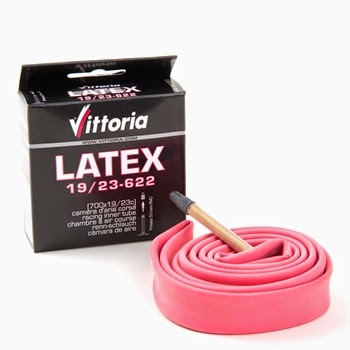
The properties of rolling resistance that apply to tires also apply to tubes. Standard butyl tubes soak up significant amounts of energy as they deform along with the tire. Fast tubular tires use latex tubes instead of butyl, which can save as much as two to four watts. This is also why tubulars feel so plush. But you can get latex tubes for clinchers, too, and have just as fast and plush of a ride as any tubular. (ATC stocks Vittoria latex tubes, a good choice.) The only downside is that you must install latex tubes very carefully, as they're not as forgiving as butyl. Read our other posts "Tips to Avoid Flats" and "Living with Latex" to avoid common installation mistakes. Once installed properly, latex tubes are just as durable as a regular tube and work better with sealant.

Pressure


Proper pressures are the final piece of the speed and comfort puzzle. Many athletes crank their tire pressures up as high as they can, thinking this will reduce rolling resistance. At first glance, it seems to make sense: higher pressure means the tire deforms less, so less energy is wasted. The catch, however, is that the imperfections and rough texture of the pavement mean that at some point higher pressure actually causes more energy to be wasted to vibration than is saved from the tire. Optimum tire pressure will be a function of how heavy the rider is, wide the tire is, and bumpy the road is. This chart by Michelin gives you an easy starting point. Keep in mind, most people find that pressures that are too high feel faster, but that is misleading. Field tests have shown this not to be true. A fast tire at optimum pressure may feel "squishy" or "dead" to riders accustomed to using higher pressures. If that describes you, stick with it and just consider it a sign that you're soon going to notice more grip and more speed.


Some Suggested Tires
  • Continental 4000S II Clincher - The ultimate jack of all trades. Great rolling resistance and great aerodynamics combined with good durability. You can train on this, race on this, time trial on this, anything at all. ATC just received a shipment of these, so they're in stock at both the Barton Springs and 360 locations. 
  • Continental Attack/Force Clincher - This is perhaps the best overall time trial setup. The narrow Attack is used on the front for aerodynamics, while the wider Force is used in the rear, where aerodynamics don't matter as much. These tires still have puncture protection, though not quite as much as the 4000S. This is the tire ATC Racing used to clinch the Texas State Time Trial record.
  • Continental SuperSonic Clincher - For those who need those last few seconds no matter the risk, the Continental SuperSonic is for you. No puncture protection layer is included at all, but rolling resistance is among the best in the world. Available in 20 and 23mm widths, this tire can make the ultimate time trial setup. While the SuperSonic Clinchers aren't suitable for regular training, professional Ironman triathletes like Thomas Gerlach do use them regularly in racing with success. If you find yourself just a few seconds from your goals and road conditions are good, give this option a look.
  • Fortezza Senso (Tubular and Clincher) - Available in Xtreme Weather, All Weather, and Superlight varieties (in increasing order of speed), these are one of ATC's most popular tires and can make a good dual purpose race/training tire and a great winter/rain tire.
  • Michelin Pro4 Clincher - Michelin offers many varieties of the Pro4, most of which have good but not great rolling resistance, falling a few watts short of the 4000S. They do make for a very nice training tire, though, with decent flat protection, comfort, and speed. They also make a "Grip" version intended specifically for wet weather grip.
  • Vittoria EVO Corsa (Tubular and Clincher) - These tires come in a few varieties as well, the CX and CS, and all are very fast. They rank among the very best in rolling resistance, just shy of the SuperSonic but with a little more flat protection. Plenty of people train on them, but they are somewhat delicate and will need to be replaced fairly often. They make a great race tire but don't have the magic aero properties of some of the Continentals, so you might avoid using them on front wheels for time trial purposes. They also tend not to fare well in wet weather chip seal areas. If you have a rainy road race, you might switch to something else.
  • 2015 Zipp Tangente (Tubular and Clincher)- Zipp has a new line of tires, and they offer some excellent choices, in various widths and levels of flat protection. Look for them to be offered in store very soon. They are optimized both for aerodynamics and rolling resistance, as Zipp was squarely targeting tires like the 4000S when they designed them.
  • Continental Gatorskin - While this tire is so slow it will make a Zipp race wheel slower than your training wheel, it does offer incredible flat protection. If you are looking for a training tire that offers flat protection and aren't concerned about comfort or speed, this is a great tire that will last a long time. They also stand up well to trainer duty, so you can use them on the trainer and on the road. Another bonus, if your significant other is faster than you like mine is, you can have her use Gatorskins so that you can ride together!

Friday, September 19, 2014

BestBikeSplit.com
Texan Software Optimizing Your Bike Split

by Jack Mott

Back in June 2013, Dallas-based software company Best Bike Split quietly launched a groundbreaking new website, one that replaces the guesswork and superstition so inherent to time trialing with real data and real math. Taking inputs about the individual rider, bike, course, and weather conditions, the tool allows a user to predict finish times, optimize pacing plans, and make intelligent equipment selections. The data nerd can enter every last thing, from CdA to rolling resistance, but for the novice or less detail-oriented athlete, the software can also make intelligent guesses on many unknown minutiae. BBS has been used with great success by various local Austin professionals and top amateurs, including pro triathlete Kelly Williamson787 Racing's Steve Guzman, and ATC Racing's Kat Hunter, and the site continues to improve, offering new features regularly.

How Does It Work?

When you set up an account, you enter various personal statistics, such as your mass. You also set up a profile for each of your bikes, including the bike's mass and your aerodynamic drag on that bike.  If you don't have an estimate for your aero drag, BBS will estimate based on your height and weight and type of position. You can then upload a course you want to model from a GPS device or mapping software in .GPX format. Most popular TT and triathlon courses are likely already uploaded, and you can simply search for them and select them. From here, the magic of mathematics takes into account all your profile data, wind, corners, hills, and so on and allows you to answer pressing questions such as...

Optimal Pacing

A sample power pacing plan
Most people know that you need to go a little harder uphill and a little easier downhill to go as fast as possible for a given effort, but exactly how much to vary your power can be tricky to determine. BBS does the math for you to give you an exact answer. You can use the resulting pacing data in a number of ways: simply review it to get a high-level idea of how to vary your pace on key climbs, download the pacing plan to select GPS devices so that you have a second-by-second power goal as you race, or use BBS to output a simplified "cheat sheet" that you can memorize or tape on your top tube.

Sample Pacing Chart
Sample Cheat Sheet

Predicting Time or Power

If you have a goal time for your bike leg, like a sub hour 40k TT or 5-hour Ironman bike split, you can use the BBS goal time model to tell you what power you will have to generate on a given course to achieve it. Conversely, if you are trying to decide on a goal power for your event, you can use the regular pacing model to see what time will result at each power level.  For example, is it worth the risk to try going 20 watts harder in  your triathlon than last year? Find out exactly how much time it will save before you decide.

Optimize Equipment Selection

Yaw Angle Distribution
Challenging bike courses with lots of hills often leave athletes wondering if they should use a road bike instead of a TT bike, or light wheels instead of aero wheels. With BBS you can set up bike profiles for various options and do the math to fairly definitively decide which option is really best.  A great example of this being put to use is the Flo Cycling weight vs aero study. True aeroweenies can dig even deeper using the yaw distribution feature. This will give you data on the time you will spend at each yaw angle on course. Since the benefit of some equipment choices such as tire and wheel width depends on the yaw angle of the wind, you can use this to shave off seconds nobody else would even think about.

Optimize Your Position

The Wind Tunnel Model is an upcoming feature that will estimate your overall aerodynamic drag by analyzing your past performances. This will allow you to compare test sessions or races with different equipment or positions to see if you have managed to reduce your aero drag or rolling resistance.

How Accurate Is This?

BBS uses well-established cycling physics to make its computations. If provided with accurate input for the rider, course, and atmospheric conditions, it will produce very accurate output. Many amateurs have reported spooky accuracy even when using estimates for some inputs, such as their aero drag.  BBS also features a few case studies on their website.

Cost

BBS has free, premium, and coaching memberships available.  Premium membership unlocks unlimited bike profiles, unlimited course plan downloads, and advanced features. Coaching memberships allow you to keep profiles on all of your clients.  BBS also offers a pro-level analysis service, providing personal attention to ensure the accuracy of course and rider input, as well as increased processing power for more accurate course modeling, if necessary. Pricing plans are detailed here.

About Best Bike Split

Best Bike Split was co-founded by Ryan Cooper and Rich Harpel in June 2013 as an offshoot of their first company together, Optimized Training Labs, which uses advanced mathematics to create training plans for triathletes and runners. Ryan is a Ph.D. mathematician who specializes in optimization mathematics, while Rich’s background is in design and web development. The two met in Dallas while training for the 2006 Ironman Coeur d’Alene. Best Bike Split’s goal is to be the standard for predictive race modeling and analysis for triathletes and time-trialists racing with power meters.


Wednesday, September 3, 2014

A Ride for Any Day of the Week
Austin Area Group Rides, updated for 2014


Some Austin group rides have been around for more than 30 years; others peter out after half a season. The ride info below has been verified as of August 31, 2014, but if in doubt, especially after daylight savings time has ended, check in with the ride organizer. This year we've included website links when available.

If you notice a ride we're missing, we'd very much appreciate your help to add it; email Kat at kat@kathrynhunter.net.

Road bikes are recommended for all rides included below unless otherwise noted. "Time" is usually wheels down - it's always a good idea to show up 10 to 15 minutes early. And last but not least, these are unsanctioned rides on open roads; you're responsible for your own safety.

Click the links below to search by difficulty level or click "View By Day of Week" to see a list of rides for a particular day.

Beginner - Moderate - Hard - Insane - Women Only -
View By Day of Week


Beginner Friendly


Rothe Recovery Ride

A social ride led by elite cyclist and coach Stefan Rothe, this Monday evening option is open to anyone on a road bike. The route changes every week, going out east toward McKinney Falls and the Tuesday Nighter course, north along Shoal Creek, or south to 5th street or to Buda if time allows. Ride time is typically 1.5-2 hours max. Start time changes with the season, so email Stefan if in doubt. You can also check ride info at http://www.austintricyclist.com/articles/rides-and-events-pg37.htm.

StartATC downtown, 923 Barton Springs Rd.
TimeMonday, 6 p.m. until end of September
Duration1.5-2 hrs
Routevaries
ContactStefan Rothe, stefan@rothetraining.com


BSS (Research Blvd.) Wednesday Beginner Road Ride

Hosted by the Bicycle Sports Shop Research Blvd location, this is a good ride for new cyclists or those wanting to ease back into the saddle. Learn about group riding on a 15-mile, 60-90 minute ride along bike lanes and neighborhood streets. The route consists of mostly flat roads, with some hills to learn about shifting and cadence. This ride is no drop and makes frequent stops. Check http://bicyclesportshop.com/events/road-pg1768.htm for current info.

StartBicycle Sports Shop, 10947 Research Blvd.
TimeWednesday, 6:30 p.m.
Distance15 mi, 60-90 mins
ContactBicycle Sports Shop, 512-345-7460


Friday Truancy Ride

This 17-18 mph ride led by Mellow Johnny’s takes you through neighborhoods and official bike routes for the most part, with minimal travel on large roadways and just a few hills and optional sprint points. This group is very social, usually hanging out for coffee and snacks before and after the ride. Check http://www.mellowjohnnys.com/news- and-events/ for current info.

StartMellow Johnny’s, 400 Nueces
TimeFriday, 2:30 p.m. 
Distance30 mi, ~ 2 hrs
Routesouthwest toward airport
ContactMellow Johnny’s, 512-473-0222


BSS (Parmer Ln.) All Levels Road Ride

Hosted by the Bicycle Sports Shop Parmer location, this ride offers two options: a faster-paced 35-mile ride for intermediate-level riders, or a more relaxed 24-mile ride for beginner/intermediate riders. The route is a straight out and back on Parmer Lane, so you can turn back whenever you'd like.

StartBicycle Sport Shop, 9900 W. Parmer Ln.
TimeSaturday, 8 a.m. 
Distance35 or 24 mi
RouteParmer Ln.
ContactBicycle Sports Shop, 512-637-6890


Scout-a-Route Ride

Great for cyclists new to riding or commuting, or for those just looking for a casual spin, this ride aids participants in navigating through the city and learning safe bike commuting options. Two groups are offered: 1) riders who can average 12 mph for 15-25 miles with one or two regrouping points, and 2) riders who can average 14-16 mph for 20-30 miles, with an extended mileage option. Routes vary weekly, going through Clarksville, Rollingwood, McKinney Falls, South Austin, East Austin, and more. Scout-a-Route is no-drop and is co-hosted by MJ's and the Austin Cycling Association. Check http://www.mellowjohnnys.com/news-and-events/ for current info.

StartMellow Johnny’s, 400 Nueces
TimeSaturday, 9 a.m.
Distance18-25 mi, ~ 3 hrs
Routevaries
Contactrides@mellowjohnnys.com


BSS (Lamar Blvd.) Sunday Beginner Road Ride

Hosted by the Bicycle Sports Shop Lamar location, this ride is a no-drop ride for 18+ adults (16-17 allowed with parental supervision). You must be on a hybrid or road bike; no trikes or recumbents allowed. Bring your helmet and flat repair kit. Average speed is 10-12 mph. An intermediate ride starts at the same time. Check  http://bicyclesportshop.com/events/road-pg1768.htm for current info. 

StartBicycle Sport Shop, 517 S. Lamar Blvd
TimeSunday, 8 a.m.
Duration2+ hrs
Routevaries
ContactBicycle Sports Shop, 512-477-3472


Jack and Adam’s Sunday Ride

The J&A Sunday Ride is a popular favorite in Austin. Ride options range from “no drop” to intermediate and advanced. Rides are often led by shop employees or teams that the shop sponsors. Check the J&A blog for the month’s scheduled rides. Note that sometimes rides are canceled for area events, and the ride usually starts from the Steiner Steakhouse once a month. Routes and distances vary. (**The shop's new location is on South Lamar.**) 

StartJack & Adam’s Bicycles, 300 South Lamar, Suite L
TimeSunday, 8:30 a.m.
Durationvaries according to level, but is typically 2-3 hrs; Steiner rides are usually 1.5-2 hrs
Routevaries by week
ContactJack and Adam’s, 888-499-0863, info@jackandadams.com


Moderate


Nelo’s Shop Ride

Always following the same route (see map info below), this ride meets Monday and Wednesday nights between April and late September. Although it can be described as “moderate,” the ride gets progressively harder as the summer wears on. Riders regroup at Parliament. Lights required! Check http://www.neloscycles.com/shop-ride.html for current info.

StartNelo’s Cycles, 8108 Mesa Dr. #105B
TimeMonday & Wednesday, 7 p.m. from March to end of DST
Duration14.40 mi, 50 min
RouteGarmin Map
ContactNelo's Cycles, 512-338-0505


River City Market Racing Tuesday AM Hill Ride 

This ride, led by the women’s racing team River City Market Racing, meets at 7am for coffee at The Coffee Bean & Tea Leaf on Lamar. Roll out is at 7:15am. The route varies, but always hits the hills west of town for a 25-30 mile hard workout. Though the ride isn’t “no drop,” they regroup at the top of each big hill and recover between. Men and women riders welcome.

StartThe Coffee Bean & Tea Leaf on Lamar
TimeTuesday, 7:15am
Duration25-30 mi, 90-105 mins
Routevaries
ContactJames Murff, james@murffbada.com


T&T Violet Crown Ride

Meeting at Mellow Johnny’s every Tuesday and Thursday morning and led by a member of the Violet Crown cycling club, this ride is ideal for the intermediate-level cyclist. Expect a steady tempo ride with an average pace of 16-18 mph. Experience riding in a group is a must. Check http://www.mellowjohnnys.com/news-and-events/ for current info.

StartMellow Johnny’s, 400 Nueces
TimeTuesday & Thursday, 7 a.m. 
Duration1.5-2 hrs
Routevaries
ContactAndy Austin, president@violetcrown.org


Lake Travis Tuesday Nighter

Rolling out from the heart of Lakeway during Daylight Savings Time, the Lake Travis Tuesday Nighter offers a little quality suffering for the work-week. The ride, led by the Lake Travis Cycling Club, usually has a group of 10-20 riders and is moderate to hard, with an average speed somewhere around 18-22 mph. The warm-up lasts the first five miles down 620 to the turn onto Bee Cave Road, and then the peloton separates into unofficial "A" and "B" groups until the turnaround at the Knollwood Loop just before Hwy 360, where the ride regroups again. (See below for the route map.) After the ride, everyone pitches in and enjoys some brews.

StartPlains Capital Bank, 1110 S RR 620
TimeTuesday, 6 p.m.
Distance24 mi, 1-1.5 hrs
Routehttp://www.gpsies.com/map.do?fileId=blbxnhmahxrgavlw
ContactTim Diven, chichitao@hotmail.com or https://www.facebook.com/ltcycling


BSS (Research Blvd.) Tuesday Intermediate & Advanced Road Ride

This 16-18 mile ride takes Spicewood Springs, averaging 14-16 mph. You  must be on a road or tri bike. A helmet and lights are required, no exceptions. Check http://bicyclesportshop.com/events/road-pg1768.htm for current info.

StartBicycle Sports Shop, 10947 Research Blvd.
TimeTuesday, 7 p.m. - 8:30 p.m.
Distance16-18 mi
RouteSpicewood Springs
ContactBicycle Sports Shop, 512-345-7460


KLCTVE Fusion Thursday Night Ride

This no-drop ride takes you around town: east toward Mueller, north toward Shoal Creek, and then back downtown via Tarrytown and Pease  Park, with one rest stop at the Mosaic market in Mueller. Expect some flats, short hills, and a few optional sprint points. You'll need to be comfortable with urban riding and obeying traffic laws. Bring a helmet and lights. Check http://www.mellowjohnnys.com/news-and-events/ for current info.

StartMellow Johnny's, 400 Nueces
TimeThursday, 6:30 p.m.
Distance24 miles, ~ 2 hrs
Routecentral/north
ContactMellow Johnny's, 512-473-0222


Gruppo VOP Friday Ride

Gruppo VOP, formed 15 years ago, is an informal association of cyclists that welcomes all riders. The Friday ride is a 28-mile loop going from Westlake out Bee Caves Rd, down River Hills Rd, and up through Seven Oaks back to Bee Caves Road and the Bee Cave City limit sign. Some riders skip the river valley and go to the Barton Creek West entrance for a 19-mile loop. See http://www.bradhoustonlaw.com/gruppo-vop/ for more info.

StartBrad Houston’s house, 1813 Holly Hill
TimeFriday, 6:30 a.m. (time varies according to season)
Duration19 or 28 mi
Routesee website
ContactBrad Houston, brad@bradhoustonlaw.com


The Bagel Ride

Led by the Violet Crown cycling club, this ride usually ends with a celebratory bagel and coffee. The ride starts at the Einstein Bros Bagels on Parmer/North I-35. One group completes 50-60 miles, and another travels 70-80 miles.

StartEinstein Bros Bagels, 12400 N IH35
TimeSaturday, 8:15 a.m. (time varies according to season)
Distance50-60 mi or 70-80 mi
Routevaries
ContactDavid Serrins, dserrins@gmail.com


Cycle Progression Saturday Ride


Starting on South Lamar at bike shop Cycle Progression, the group rides a casual/medium pace to San Marcos and back. The mileage is generally 60-75 miles and is led by the Cycle Progression team. Check in once the time changes, as they may move to a 9 a.m. start.

StartCycle Progression, 2153 South Lamar
TimeSaturday, 8 a.m. (time varies according to season)
Distance60-75 miles
RouteSan Marcos & return
ContactAlex Arumi,alex@cycleprogression.com


Bat City Saturday Team Ride - intermediate

Led by the Bat City Cycling team, this ride has an "A" group and "B" group. The B group averages 18-19 mph for 50-60 miles. The ride starts at Caffe Yolly on the northwest corner of Avery Ranch and Parmer. Yolly opens at 7 a.m., so there's plenty of time for a pre-ride espresso. Check Bat City's Facebook page for current info, maps, and other ride opportunities, or http://www.batcitycycling.com/calendar/

StartCaffe Yolly, 14900 Avery Ranch Blvd
TimeSaturday, 8 a.m.
Distance50-60 mi
Routevaries
Contacthttps://www.facebook.com/BatCityCycling


BSS (Parmer Ln.) All Levels Road Ride

Hosted by the Bicycle Sports Shop Parmer location, this ride offers two options: a faster-paced 35-mile ride for intermediate-level riders, or a more relaxed 24-mile ride for beginner/intermediate riders. The route is a straight out and back on Parmer Lane, so you can turn back whenever you'd like.

StartBicycle Sport Shop, 9900 W. Parmer Ln.
TimeSaturday, 8 a.m. 
Distance35 or 24 mi
RouteParmer Ln.
ContactBicycle Sports Shop, 512-637-6890


Middle of the Road Ride (MOTR)

On this intermediate-level, 30-40 mile ride, the front group averages 17-20 mph, and a second group averages 15-16 mph. All participants start together in a large group of 50+ people and naturally split into the intermediate and advanced groups. Routes may vary, but current website info lists the "Happy Buda route." Check  http://www.mellowjohnnys.com/news-and-events/ for the latest details.

StartMellow Johnny’s, 400 Nueces
TimeSaturday, 8:30 a.m.
Distance35 miles, ~ 3 hrs
RouteBuda & return
Contactrides@mellowjohnnys.com


Gruppo VOP Sunday Ride

Gruppo VOP, formed 14 years ago, is an informal association of cyclists that welcomes all riders. The Sunday ride, ideal as an introduction to VOP, is a 27-mile recovery ride that heads south from Westlake to South Mopac/45 and FM 1826, coming back Slaughter Lane to Mopac. It’s the most social of the VOP rides and typically ends by 9:45-9:50 a.m. See http://www.bradhoustonlaw.com/gruppo-vop/ for more info.

StartBrad Houston’s house, 1813 Holly Hill
TimeSunday, 8 a.m.
Duration27 miles
Routesee website
ContactBrad Houston, brad@bradhoustonlaw.com


Bat City Sunday Team Ride

Led by the Bat City Cycling team, this intermediate-level ride averages a steady 18-19 mph The ride starts at Caffe Yolly on the northwest corner of Avery Ranch and Parmer. Yolly opens at 7 a.m., so there's plenty of time for a pre-ride espresso. Check Bat City's Facebook page for current info, maps, and other ride opportunities, or http://www.batcitycycling.com/calendar/

StartCaffe Yolly, 14900 Avery Ranch Blvd
TimeSunday, 8 a.m.
Distance50-60 mi
Routevaries
Contacthttps://www.facebook.com/BatCityCycling


BSS (Lamar Blvd.) Sunday Intermediate Road Ride

Hosted by the Bicycle Sports Shop Lamar location, this ride features a different route in south and west Austin each week. Average speed is 14-16 mph (including hills). You must be on a road or tri bike. A beginner ride starts at the same time. Check http://bicyclesportshop.com/events/road-pg1768.htm for current info.

StartBicycle Sport Shop, 517 S. Lamar Blvd
TimeSunday, 8 a.m.
Duration2-3 hrs 
Routevaries
ContactBicycle Sports Shop, 512-477-3472


Sunday Violet Crown Ride

Reputed to be one of the oldest group rides in Austin, this group has been meeting every Sunday morning for more than 30 years. Average pace is 17-18 mph for 50-60 miles, and there are some rest points, but if you get dropped, you’re usually on your own. The ride is well suited for an intermediate rider on a road bike accustomed to riding in groups. Check http://www.mellowjohnnys.com/news-and-events/ for current info.

StartMellow Johnny’s, 400 Nueces
TimeSunday, 8:00 a.m.
Duration3-4 hrs
Routevaries
ContactDave Henderson, suplesse@gmail.com


Sunday Circle C Ranch Cycling Club Ride

This ride is a more spirited version of the club’s no-drop Saturday ride (contact the club for more info). Distances and routes vary, but can range from 35-70 miles, depending on the difficulty of the terrain. The average distance is generally 45 miles, with a speed of 13-15 mph. A few riders tend to go off the front at higher speeds. Expect a pack of anywhere from 4 to 30 riders, with a mix of beginners and seasoned veterans. Inclement weather may cancel the ride. Sign on to the Yahoo Group for more info, including weekly maps. Membership encouraged but not required. **Ride time frequently changes and will probably move to 8:15 with cooler temperatures.**

StartStarbucks, 9600 Escarpment Blvd #700
TimeSunday, 7:30 a.m.
Durationvaries
Routevaries
ContactFacebook Group


Jack and Adam’s Sunday Ride

The J&A Sunday Ride is a popular favorite in Austin. Ride options range from “no drop” to intermediate and advanced. Rides are often led by shop employees or teams that the shop sponsors. Check the J&A blog for the month’s scheduled rides. Note that sometimes rides are canceled for area events, and the ride usually starts from the Steiner Steakhouse once a month. Routes and distances vary. (**The shop's new location is on South Lamar.**) 

StartJack & Adam’s Bicycles, 300 South Lamar, Suite L
TimeSunday, 8:30 a.m.
Durationvaries according to level, but is typically 2-3 hrs; Steiner rides are usually 1.5-2 hrs
Routevaries by week
ContactJack and Adam’s, 888-499-0863, info@jackandadams.com


ATC Barton Springs Sunday Recovery/Intermediate Ride

Led by ATC employees, this is a very small and casual group, usually between 4 and 20 cyclists. The average pace is 17 mph, and riders regroup at multiple points along the 30-mile route, which heads southeast to Stassney and Burleson. This ride is often canceled for rain or very cold weather; if in doubt, call the shop to check. Find more info at http://www.austintricyclist.com/articles/rides-and-events-pg37.htm

StartATC downtown, 923 Barton Springs Rd.
TimeSunday, 9 a.m.
Distance~30 mi
RouteEast
ContactATC, 512-494-9252, info@austintricyclist.com


ATC 360 Sunday Ride

This no-drop, out-and-back ride takes Bee Caves Rd to Bee Caves Parkway, with a hilly side-trip on Cuernavaca. The group tends to be small, with an average speed around 16 mph. For more info, see http://www.austintricyclist.com/articles/rides-and-events-pg37.htm

StartATC 360, Davenport Village
TimeSunday, 9 a.m.
Distance30 mi
Routewest, click here for map http://www.mapmyride.com/routes/view/218895751
ContactATC 360, 512-483-1273, info@austintricyclist.com


Division 1 Ride

A recovery ride led by the Boneshaker/Div 1 team and Division 1 staff, the Div 1 ride leaves from the bike shop on East 7th and heads out to Manor. The average pace is 17 mph, and all bikes are welcome. Attendance varies but is usually around 15-20 riders. The bike shop also doubles as coffee house - say yes to the pre-ride espresso!

StartDivision 1 Bicycles, 1620 E. 7th
TimeSunday, 9 a.m.
Distance25-30 mi
RouteManor & return
ContactDiv 1 Bicycles, 512-481-1333


Hard


Gruppo VOP Monday Ride

Gruppo VOP, formed 14 years ago, is an informal association of cyclists that welcomes all riders. The Monday ride is a fast-paced, 32-mile loop that heads south from the Westlake area. Very important: Sometimes the start time and place for the Monday ride varies slightly, so for this ride, email Brad a few days in advance so that the riders know you’re joining them. See http://www.bradhoustonlaw.com/gruppo-vop/ for more info.

StartBrad Houston’s house, 1813 Holly Hill
TimeMonday, 6:30 a.m. (time varies according to season)
Distance32 miles
Routesee website
ContactBrad Houston, brad@bradhoustonlaw.com


Gruppo VOP Wednesday Ride

Gruppo VOP, formed 14 years ago, is an informal association of cyclists that welcomes all riders. This very popular, very challenging Wednesday ride is a race-paced, 28-mile loop that goes out and back on Southwest Pkway to Barton Creek Blvd and Bee Cave Road, then through the neighborhoods in Lost Creek. You’re guaranteed to get in some hard efforts and brutal hills. Be prepared for three highly coveted sprint points.

StartBrad Houston’s house, 1813 Holly Hill
TimeWednesday, 6:30 a.m. (time varies according to season)
Distance28 mi
Routesee website
ContactBrad Houston, brad@bradhoustonlaw.com


Squadra Hustle

Super Squadra leads this new ride from Austinbikes every Wednesday afternoon, heading west for a steady, 2-2.5 hour ride on hard roads. They start as late as daylight allows, 4:30 p.m. currently and moving to 2:30 p.m. once the time changes. Check out the ride's Strava profile for more details: http://www.strava.com/activities/179892520

StartAustinbikes, 1010 West Lynn
TimeWednesday, 4:30 p.m. until DST ends
Duration2-2.5 hrs
Routewest, see sample Strava profile above
ContactDave Wenger, david.wenger@gmail.com


Pure Austin Driveway Series The Driveway Series is a criterium race, not a ride, but it happens every Thursday evening from March to October and is a great way to train. Many Austin area bike racers consider it an essential part of their weekly training plan. For event info, go to http://www.drivewayseries.com/


Gruppo VOP Saturday Ride

Gruppo VOP, formed 14 years ago, is an informal association of cyclists that welcomes all riders. The Saturday ride offers ride options of 26, 45, or 52 miles. Like the Gruppo VOP Wednesday Ride, this ride often feels like a race, with multiple sprint points and a consistently high pace. The longer loops follow Wednesday’s route and then continue up Hwy 620 to River Place or Anderson Mill Road. Some riders add on Lime Creek. The short ride usually travels back along Bee Caves Rd from the intersection of Hwy 620 and Bee Caves Rd. See http://www.bradhoustonlaw.com/gruppo- vop/ for more info.

StartBrad Houston’s house, 1813 Holly Hill
TimeSaturday, 7:30 a.m.
Distance26, 45, or 52 mi
Routesee website
ContactBrad Houston, brad@bradhoustonlaw.com


MJ 100K

If there's not a road race going on the same weekend, this cutthroat ride is popular with a fast crowd. There aren't sprint points, per se -- everyone just rides like there's one every quarter mile. The route twists through far southeast Austin's farm country, with a quick refueling stop at mile 35. You'll get left behind if you drag your feet, and the group doesn't always stop for mechanicals. Check http://www.mellowjohnnys.com/news-and-events/ for current info.

StartMellow Johnny's, 400 Nueces
TimeSaturday, 8 a.m.
Distance62 miles
Routesoutheast
ContactMellow Johnny's, 512-473-0222

Bat City Saturday Team Ride - hard

Led by the Bat City Cycling team, this ride has "A" and "B" groups. If it's your first time on the ride, it's recommended to stick with the B group, as this is probably the fastest team ride on the north side of town, with lots of surging and a consistently hard pace. The A group averages around 20 mph for a 65-75 mile route. The ride starts at Caffe Yolly on the northwest corner of Avery Ranch and Parmer. Yolly opens at 7 a.m., so there's plenty of time for a pre-ride espresso. Check Bat City's Facebook page for current info, maps, and other ride opportunities, or http://www.batcitycycling.com/calendar/

StartCaffe Yolly, 14900 Avery Ranch Blvd
TimeSaturday, 8 a.m.
Distance65-75 mi
Routevaries
Contacthttps://www.facebook.com/BatCityCycling


Insanely Hard


Heavy Metal Ride

All masochists are welcome, whether dedicated roadie, fixie rider, mountain biker, or whatever-else-on-two-wheels, on this informal Monday-night hammerfest. The group meets at the Pflugerville Pedestrian Bridge. Lights and helmets required. Beer money recommended for after.

StartPflugerville Pedestrian Bridge
TimeMonday, 7:30 p.m.
RouteBikely
ContactFacebook


Tuesday Nighter

Not for the weak of heart, this event has been tearing down farm roads in Southeast Austin at 25-30 mph for what some regulars estimate to be 25 to 30 years. However, the addition of neighborhoods and two stop signs on the course has slowed things down a bit. The ride currently completes three 9-mile laps, with an unofficial “A group” and “B group” determined by who can hang on in the first few miles. The ride is free, and there’s no marked course, no support, no prizes, no judges, and no category system, but by most accounts, it's very much a race.

VideoTuesday Nighter History
StartAlum Rock Dr and Thaxton Rd, Southeast Austin
TimeTuesday, 6 p.m. sharp during daylight savings time
RouteStrava
ContactFacebook


ATC World Championship Saturday Ride

This ride is a classic in Austin, regularly hosting elite-level and professional triathletes and road cyclists. If you're trying to "A pack" it, most weeks the pace is very fast. The pro: no one will ever chide you for attacking or pushing the pace. The con: you will probably get dropped. The directions are simple, though, and numerous splinter groups form off the back. The ride starts with a warm-up down Barton Springs and the Mopac feeder. After the right turn onto Southwest Parkway, the pace picks up, continuing at top speed through the right turn onto Hwy 71 until the sprint point at the Bee Caves city limit sign. The group often pauses at the cleaners at Hwy 71/Bee Caves. Some people head home from there via Bee Caves for the short loop and others continue on the dam loop, with the possible addition of Lime Creek. This is one of the few group rides that welcomes tri bikes and aero bars—just be sure to stay out of them when you’re in the pack.

VideoATC Video Montage
StartATC downtown, 923 Barton Springs Rd.
TimeSaturday, 8:30 a.m.
Distance30 or 55 mi
Route30 miles, 55 miles: continues north along 620 on the dam loop 
ContactATC, 512-494-9252, info@austintricyclist.com


Women Only


Bikin’ Betties

A very casual, ladies-only ride, Bikin’ Betties welcomes beginning cyclists. The distance traveled is from 8 to 20 miles, always ending at a bar, restaurant, or coffee shop for post-ride refreshment. Since rides vary widely in intensity and distance, check the event details on their Facebook site.

Startvaries
TimeMonday 8:00 pm (departs 8:20pm)  
Durationvaries
Routevaries
ContactFacebook


BSS (Lamar Blvd.) Women's Intermediate & Advanced Road Ride

Welcoming intermediate/advanced level women cyclists, this ride averages 14-16 mph, including hills, for 15-20 miles. Meet at the shop at 6:15. You must be on a road or tri bike. A helmet and lights are required, no exceptions. Check http://bicyclesportshop.com/events/road-pg1768.htm for current info.

StartBicycle Sport Shop, 517 South Lamar Blvd.
TimeTuesday, 6:30 p.m. - 8 p.m. 
Distance15-20 mi
ContactBicycle Sports Shop, 512-477-3472


AFWC Ladies’ Rider

Led by the Austin Flyers Women’s Cycling Club, this intermediate, women-only ride averages 15-16 mph, with varying routes. The pace and the people are friendly. Check http://www.mellowjohnnys.com/news-and-events/ for current info.

StartMellow Johnny’s, 400 Nueces
TimeSunday, 8 a.m.
Duration2.5-3 hrs
Routevaries
Contactaustinwomenonbikes@gmail.com


Rides by day of week


Monday

Rothe Recovery Ride, ATC Barton Springs
Nelo&#8217s Shop Ride, NC
Gruppo VOP, Westlake
Heavy Metal Ride, Pflugerville Ped. Bridge
Bikin’ Betties


Tuesday

River City Market Racing Hill Ride, The Coffee Bean & Tea Leaf on Lamar
T&T Violet Crown Ride, MJ’s
Tuesday Nighter, SEast Austin
BSS (Lamar Blvd.) Women's Intermediate & Advanced Road Ride
BSS (Research Blvd.) Tuesday Intermediate & Advanced Road Ride
Lake Travis Tuesday Nighter, Lakeway


Wednesday

BSS (Research Blvd.) Wednesday Beginner Ride 
Nelo&#8217s Shop Ride, NC
Gruppo VOP, Westlake
Squadra Hustle, Austinbikes


Thurs

T&T Violet Crown Ride, MJ’s
Pure Austin Driveway Series, Driveway
KLCTVE Fusion Thursday Night Ride, MJ’s


Friday

Friday Truancy Ride, MJ’s
Gruppo VOP, Westlake


Saturday

ATC World Championship Ride, ATC Barton Springs
Scout-a-Route Ride, MJ’s
BSS (Parmer) All Levels Road Ride
MJ 100K
Middle of the Road Ride, MJ’s
Gruppo VOP, Westlake
Cycle Progression Saturday Ride
Bagel Ride, Einstein Bros. Bagels
Bat City Saturday Team Ride (hard), Cafe Yolly
Bat City Saturday Team Ride (intermediate), Cafe Yolly


Sunday

J&A’s Sunday Ride, J&A’s
Gruppo VOP, Westlake
Bat City Sunday Team Ride, Cafe Yolly
BSS Lamar Sunday Beginner Ride
BSS Lamar Sunday Intermediate Ride, BSS
Sunday Violet Crown Ride, MJ’s
Sunday Circle C Ranch Cycling Club Ride, Starbucks Escarpment
ATC Sunday Recovery Ride, ATC Barton Springs
ATC 360 Ride
AFWC Ladies’ Rider, MJ’s
Div 1 Ride, D1


© Copyright 2014, Kathryn Hunter

Tuesday, June 10, 2014

2014 Texas State Time Trial Champion
Gear and Tech Specs

by Jack Mott


Being former or current multi-sport athletes in many cases, the ATC Racing women pride themselves on their time trialing prowess and put up impressive results at this year's Texas State Time Trial Championship. Katie Kantzes nailed a third place in the Eddy Merckx category, Marla Briley got second in category 3, and Kat Hunter took first place in Cat 1/2. (You can read Kat's race report on TexasBikeRacing.com.)

On Sunday, the team of Missy Ruthven (ATC owner), Maggi Finley, Marla Briley, and Kat Hunter backed up those impressive results with a 56:37, fastest women's time, in the team time trial.

To give you an idea of the attention to detail that goes into a winning time trial, we will break down all the gear, aero data, and power data of Kat Hunter's winning ride.


Bike Build Specs
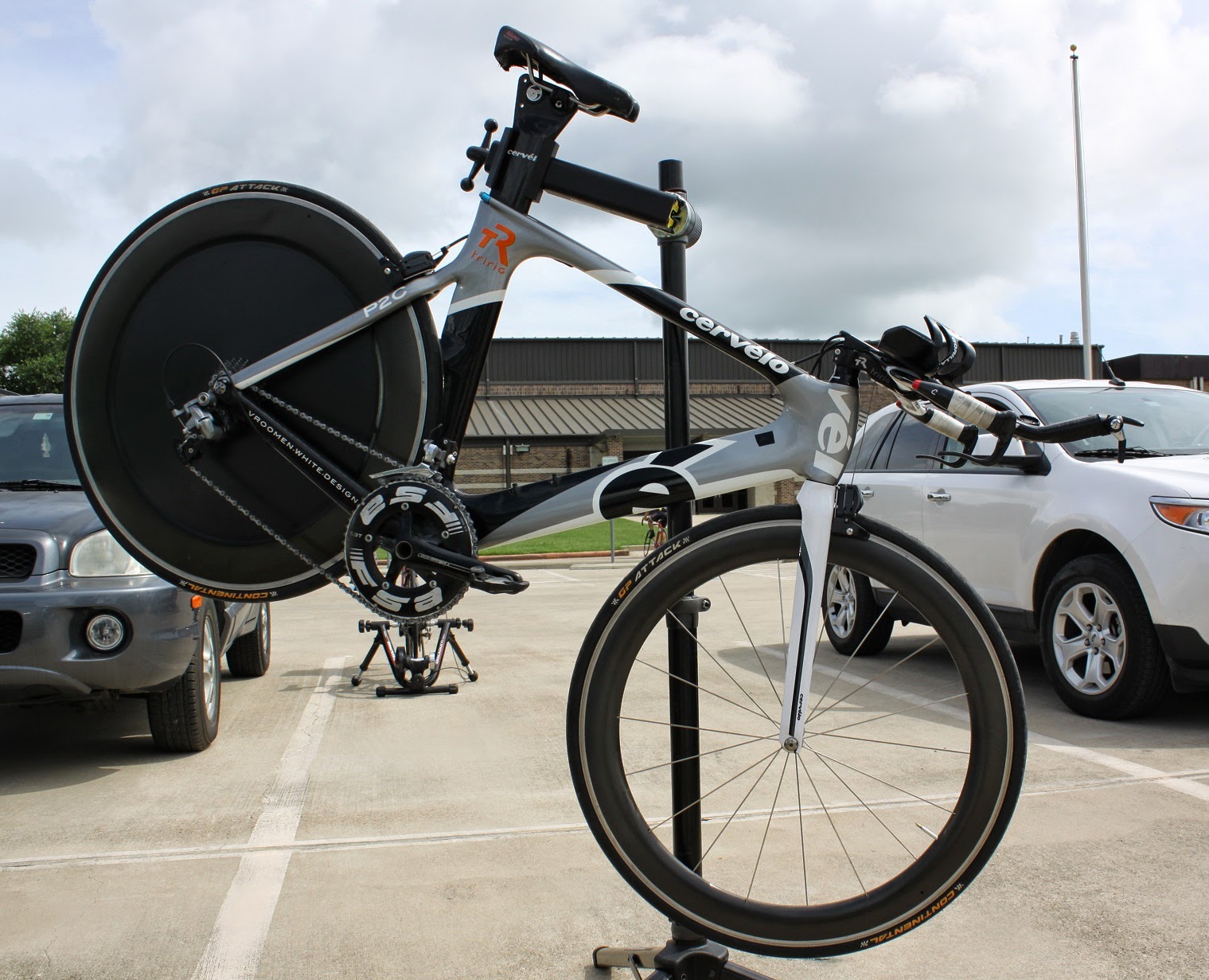
  • Frame - Cervelo P2C classic with modified top tube cable routing 
  • Wheels - HED Jet 6 front, HED Jet 9 with wheelbuilder disc cover and G3 Powertap hub
  • Tires - Continental Attack Clinchers, 22mm @ 105psi with Vittoria latex tubes
  • Aerobars - UCI Legal HED Corsair with integrated brake levers and Vision clipons
  • Stem - TriRig Sigma aero stem
  • Fork - Cervelo FK26
  • Brakes - TriRig Omega aero brake
  • Saddle - Adamo
  • Head Unit - Powertap Joule
  • Hydration - One between the arms rocket science bottle in a XLAB Gorilla cage
  • Skewers - View-Speed aero bolt on skewers
  • Helmet - Giro Selector
  • Cranks - FSA Gossamer with FSA 54T aero chainring
  • Pedals - Look Keo Blade aero pedal
  • Gruppo - Shimano Ultegra
  • Cassette - Shimano Dura Ace 12-25
  • Derailleur Pulleys - Hawk Racing
  • Bottom Bracket - Hawk Racing
  • Chain Lube - Rock n' Roll Extreme
  • Bar Tape - Tennis grip from Target. I dunno. It was thin.
Power Meter Data
  • Goal Power -  250 watts
  • Actual Average Power - 247 watts
  • Variability Index - 1.0
  • First Half Power (Headwind) - 254 watts
  • Second Half Power (Tailwind) - 241watts
  • Avg Temp - 82 deg G
  • Avg Cadence - 92
  • Avg Speed - 26.6 mph
  • Distance - 40k
  • Time - 56:23

Power File


WKO+ Power File from the TT

Aero Data

Approximate yaw angle distribution from BestBikeSplit.com


Using BestBikeSplit, an excellent online aerodynamic and pacing tool, we can approximate that Kat had a CdA of approximately .20 at 0 yaw, and .19 at yaw. We can also see that about 70% of the race was between 0 and 5 degrees of yaw, with most of the rest of the race between 10 and 15 degrees of yaw.  Knowing what the angle of attack of the wind is during a race can help you make intelligent equipment choices. For instance, we can see from this data that a deeper front wheel would have been faster, as around 30% of the race had yaw angles where a Jet 9 is a bit faster than a Jet 6.  Since about 70% of the race was at very low yaw angles,  choosing a narrower tire was definitely a good call. Narrow tends to be aero, at low yaw.

Close-up Bike Shots 

The venerable P2 Classic remains competitive

View Speed Skewers, Cervelo FK26 fork, and HED Jet 6 with Continental Attacks

HED Jet 9 with a disc cover taped on,  nice clean chain

TriRig brake, stem, and HED aerobars make for a clean front end


Sunday, June 1, 2014

The Mean Maximal Power Chart

by Jack Mott

In a previous post, Power Meters Explained, we went over some of the benefits and uses of a power meter, also providing a quick review of the popular models available. Now we will dive deeper and discuss the Mean Maximal Power (MMP) chart and its many uses.

The Power Duration Curve


The power duration curve represents the maximum power you can produce on the bike over each duration of time. This horizontal axis is logarithmic time, which allows you to see relevant changes in  power more clearly. Most cyclists will have a power duration curve shaped somewhat like the example above. For periods of about 1 to 10 seconds, you can produce a huge amount of power using primarily the phosphogen energy system, shown in red. Then there will be a steep drop-off in your sustainable power from there to about five minutes, when power production is dominated by your anaerobic energy system. Anaerobic capacity is a fixed amount of energy, lasting only a few minutes. Hence the steep decline in sustainable power in this region. As your sustainable power levels off, power production is dominated by the aerobic system, which is almost indefinitely sustainable, with a slow, gradual drop-off as the duration goes on for hours and hours. Knowing how these three energy systems interact, you can predict how much power you should produce at any duration, as long as you have enough data to have an idea of how your own power duration curve is shaped.

The MMP Chart

The MMP chart looks at the most power you have ever averaged for each given amount of time. It scans through all the training files you specify, finding your best ever one-second power, two-second power, and so on all the way out to your longest ride. This functionality is available in many power analysis programs, including Training Peaks, WKO, and Golden Cheetah. If you have done all-out efforts over many different time periods, your MMP chart will look very much like the example above. If your data is sparse you won't get a clear picture of how your power duration curve is shaped.  Below are two examples. One is an MMP chart with data from many rides; this data includes hard sprints, hard anaerobic efforts, and hard long-term efforts. Note the resemblance to the theoretical power duration curve. On the right is an MMP chart with sparse data. The rider has done no all-out sprints, so you don't see the sharp decline in the anaerobic zone. If you want to have a good idea of what your power duration curve is, you should periodically do all-out efforts in each zone that you are interested in.


Identifying Strengths and Weaknesses

Once you have a good set of data in the MMP chart you can use it to identify strengths and weaknesses. Sprinters will naturally have very high power in the 1- to 30-second range. Good lead-out men or pursuit and kilo riders will have a huge anaerobic capacity, while long-distance TT specialists and mountain climbers will have big power in the aerobic range. This is the same concept as power profiling but with more refined detail. In the chart below, you can see the difference in the shape of the power duration curve between someone who might be a good cat 2/3 sprinter, and someone who might be a good cat 2/3 time trialist or triathlete. A bike racer might use this data to decide he needs to work on his sprint, or he may decide his sprint is hopeless and focus his tactics on breakaways, or switch to triathlon!


Monitoring Progress

By using date filters you can overlay different sets of data onto one chart. If you load up the day's ride on top of all your previous rides of that season, you can see if you have broken any personal records at a glance. In this example below from WKO+, the dark yellow line represents an athlete's entire season of data, and the dotted line represents a single ride. With a quick look, the athlete can see that he set a new all-time best power in the 10-minute range, highlighted in red.

Click to Zoom
Here is another example, using the MMP functionality in Golden Cheetah. The selected ride's MMP is shown via the black line, while the colored line represents the entire season of data. Again, at a glance the athlete can tell that a new sprint power record was set in the 30-second range. The shape of the day's MMP chart can quickly tell you how hard or easy a ride was, and what the nature of the ride was like.

Click to Zoom
After a group ride or race, you can load up that day's effort and compare it to the rest of your season and see if you have set any new records. New records in the longer durations would suggest your FTP might have gone up.

Guessing at Your FTP (or Any Other Power/Duration )

Once you have a good amount of power data, you will be familiar with your own personal power duration curve and can often guess what your FTP (or  approximately 60-minute power) is by looking at your MMP chart.  For example, take the athlete's MMP data below. This athlete did an all-out time trial of about 17 minutes, but has no recent data for hard efforts longer than that. The sudden drop-off in power is circled in red. If she wanted to guess at her FTP, she could just eyeball the general curve out to the one-hour mark, or use the power duration model built into Golden Cheetah to predict it (dotted red line). Don't trust these kinds of models blindly, however, as they depend on sufficient data and are not perfect!


Another tool you can use to guess at your FTP, or sustainable power for any duration, is to use normalized power (NP).  Maybe you haven't done a steady, all-out one-hour effort yet this season, but you have done plenty of hard group rides or bike races of around an hour in duration. The stochastic nature of these efforts will not result in your best possible average power, but you can use NP to estimate what an equivalently hard steady state effort's power would have been. Most power analysis tools can display the MMP chart using average power or NP. Again, don't trust NP blindly, as it can sometimes overestimate your sustainable average power. By glancing at your MMP chart in both Average and NP form you can usually get a good idea of whether your aerobic power is on the rise. With experience, you will learn if NP tends to overestimate for you.

Extrapolating your power duration curve from your MMP charts allows you to set power goals for intervals or events of any duration and estimate your current FTP, even if you haven't formally tested it.