Austin Tri-Cyclist Blog

Wednesday, August 31, 2011

Litespeed Aero Road Bike Review:
The Archon C Series

litespeed c1r


Many will remember Litespeed as the name in titanium bikes. Twenty-year-old titanium Litespeeds can still be seen out on the roads, their fanatic owners swearing by their durability and feel. It's a surprising and gutsy move then, for this brand to introduce a carbon fiber, aero road bike. This is a new material for Litespeed, as well as a new philosophy for the brand.

Litespeed is offering three versions of the Archon C series: the C3, C1, and C1R. The C3 will be the most affordable and easiest to maintain, with an adjustable seat post and external cable routing. The C1 series uses more expensive, lighter carbon fiber, and offers internal cable routing. The C1R is available only as a frame set, and features an integrated seat mast, even lighter carbon fiber, and a stiffer front end. Interestingly, the C1R goes back to external cable routing, as Litespeed believes bike racers will prefer the ease of maintenance and lighter weight.

Overview

All of the bikes in the Archon C lineup share the same shape and aero features. Every tube is airfoil-shaped to cheat the wind, including the all-important head tube, which is nicely scalloped. This is an area often overlooked by other bike makers. Another feature, first introduced by Litespeed and only seen elsewhere on the Cervelo S5, is the downtube water bottle shroud. This reduces the penalty of carrying water bottles, an important benefit since bike races are rarely short enough to go without. There are a number of other details that set the bike apart, such as a slightly asymmetric seat stay design to optimize stiffness, comfort, and aerodynamics. All models also use the BB30 bottom bracket standard to improve weight and stiffness.

Features

  • Aerologic Tubes - All Models - Aerodynamic Tube Shapes +More
  • Seat Tube Cutout - All Models - Hide The Rear Wheel From The Wind +More
  • Invisible Water Bottle - All Models - Hide The Water Bottle From The Wind +More
  • BB30 - All Models - Lighter and Stiffer +More
  • Internal Cable Routing/Di2 Routing - C1 - Less Drag For Cables and Wires +More


2011 Litespeed C Model Breakdown (UPDATED for 2012) ATC has all models in stock, come take one for a test ride!

ModelBuildImprovements Over Previous ModelMore InfoImage (click to zoom)
Litespeed C3UltegraBaselinemore info
Litespeed C3
Litespeed C1Dura AceLighter Carbon, Internal Cable Routingmore info
litespeed c1
Litespeed C1Ci2 UltegraLighter/Upgraded Componentsmore info
litespeed c1
Litespeed C1RFramesetLighter Carbon, Stiffer, External Routing, Integrated Seat Mastmore infolitespeed c1r


Litespeed Supports Local Racers

Litespeed has been stepping up to the plate and supporting local bike racers. Check out the ATC Litespeed builds of Tristan Uhl's Archon C1R and the ATC Women's Racing Archon C3

Tristan Uhl - Pro Mountain Biker and Cat 1 Road Racer - Litespeed Archon C1R

Tristan Uhl is a Mountain Biker first, but he competes regularly in cat 1 road bike races in the off-season, so look for him in his ATC kit at local races. Tristan reports that he is enjoying the bike more than the Cannondale Supersix that he rode previously. The new Litespeed build is lighter and feels stiffer overall, he says, and the rigid rear end has been great at the local Driveway crits.
litespeed c1r


Litespeed C1R Build Specs
FrameLitespeed Archon C1R
SizeS
WheelsEaston SLX
StemFSA OS-99
GruppoShimano Ultegra
CranksetFSA Carbon BB30
Weight15.6lbs (w/ lightweight tubulars)


ATC Women's Racing - Litespeed Archon C3

Litespeed is one of the sponsors of the new ATC Women's Racing team. Cat 3 racer Kat Hunter, currently racing the C3 for ATC Women's Racing, reports that the new frame feels smoother and faster downhill, and is just as comfortable as the steel round tube bike she rode before.
Litespeed C3


Litespeed C3 Build Specs
FrameLitespeed Archon C3
SizeML
WheelsHED Jet 90 Powertap
Cockpit3T LTD Stem and 3T Pro Handlebars
GruppoShimano 105/Ultegra Mix
CranksetFSA Gossamer BB30 52/38
Weight16.9lbs (w/ lightweight tubulars)

Tuesday, August 16, 2011

RACE REPORT: Tri From the Heart 2011


Back in June we previewed the new Tri From The Heart, a small sprint triathlon donating 100% of proceeds to a local charity in Brady, Texas, to help cancer patients. Here are Team ATC's race highlights.

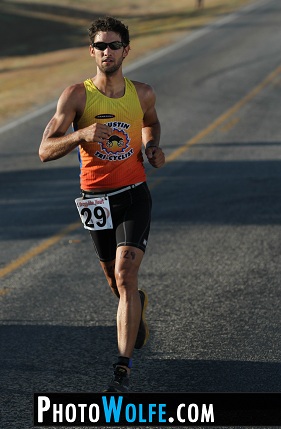
It was perfect race weather, with the 7am start keeping the high temps (mostly) at bay. ATC mechanic and tri stud George Schmitz led out of the water, and extended his lead on the bike with a race-best bike split. George was eventually chased down by Troy Clifton on the run, who passed him around mile 2 of the 4.8-mile course. George held on for 2nd overall.

The famous Tim Dove was 7th out of the water and 4th off the bike, finishing fifth overall and winning his age group.

ATC manager Adam Stroobandt, a talented runner, good cyclist, and less-than-stellar swimmer, was 24th out of the water. After miles of "ON YOUR LEFT" he clawed up to 6th on the bike and finished 4th overall, passing Tim Dove at mile 4 to preserve his dignity. Adam also won his age group.


The weekend was a solid showing by the ATC crew, but more importantly, a great first race for Tri from the Heart. Join us next year for a great time and a good cause.

Thursday, August 11, 2011

Race Report: Ring of Fire, Aug 6, 2011

by Marla Briley


There aren't many places where you find a mixture of beer-guzzling, cigarette-smoking bikers; spandex-wearing, Gatorade-drinking cyclists; and crowing, tree-climbing roosters. But, this weekend at the start of the second annual Ring of Fire ride, many of the best area cyclists were present, mixed in with Harleys, their leather-clad riders, and a few crowing, clucking chickens.

The ride had a bit of a twist from last year's ride/race. Red Licorice, the event's organizer, partnered with Austin Cycle Camp to offer $1,500 each to the first-place man and woman to cross the line on the 84-mile Big Loop course. Last year, the distance was 110 miles and Mike Minardi and I took first-place man and woman. We were awarded a pretty cool chain ring, but that is not quite the same as $1,500 dollars. With the money came a higher caliber of rider, and first-place anything was no longer on Mike and I's radar, but having a good overall day and strong ride was.

This is the tale of two rides taking place in one event. First was the race, which started at 7:30am, went for 84 miles, and included, as I said before, some of the best cyclists in the area. The second was the 84-mile ride, which started at 7:45 and included anyone who didn't care to "race," rides only a TT bike (which was not allowed in the Open "racing" group), or, like me, those who are training for something bigger to come.

Last year, the 110-mile Ring of Fire was part of my buildup to Kona. This year, the 84-mile Ring of Fire ride was part of my buildup to the 70.3 Las Vegas Championships. I needed to test my nutrition and my ability to withstand the heat and hills of the "Hill" Country. For those racing the Open, they were thinking more about strategy and whose wheel to follow, unlike me, who was thinking more about my salt intake and making sure my wattage stayed steady and consistent through the entire ride.

According to Gray Skinner, who races for Austin Bikes, the Open Division started out just like any other pro 1/2 road race. Super Squadra, the largest and only team in the race with four riders, immediately went on the attack, sending Steven Wheeler up the road. The pack is reluctant to respond with a hard 84 miles still to come. The pace picks up a bit and riders start making moves off the front. Most are unsuccessful and short-lived, as no one really wants to join the one-man sacrificial lamb (Wheeler). About 30 miles into the ride, the Cat 1 men split from the rest of the men and the women racers.

Thirty miles into my ride, I'm feeling good. I think, "The hills aren't so bad, the heat isn't so bad." I've broken the ride down into two 42-mile loops. So, by my calculations, I'm almost done with the first loop so I'm almost done! Right?

Back to the Open Division, things are getting intense – 787's Brant Speed rolls slightly off the front of the group, which is now about 15 riders. Gray moves in behind him. They begin to open up a small gap just before the difficult 1-mile climb. Alarm bells go off in the field as their gap grows to maybe 10 seconds. The New Zealand Champion and heavy favorite, Logan Hutchings, who rides for Hotel San Jose, Super Squadra's Dave Wenger, and Tulsa Tough's Stefan Rothe, ride up from the field as the five of them begin to climb. Trying to establish a gap on a climb is a good tactic, Gray explains, but also one of the more painful experiences on a bike.

"We flew up the climb and made a sizable gap on the rest of the field as I bled out of my eyeballs to stay fifth wheel," he says. "The eight of us pursued the leaders for the next 40 miles. The leaders came into view just up the road around mile 60, but the field was content to let them sit for a while, knowing that the fireworks would begin once they were caught."

Back to us regular "Joes," who are just out to test our nutrition and our legs in the hills. By the second loop, it is 10am and the temps have soared from 82 to the high 90s. I rode the first loop in just around 2 hours, never stopping for water. On the second loop, I stop for water at mile 52 and then mile 62 and again at mile 72! The heat takes its toll on me and my water bottles. I'm pouring half of my water on me, and the other half I'm drinking as if I were a dying man in the desert. While we have to stop and refill our own bottles, the Open field, for whom every second counts, have hand-up stations for their refills. So, while I'm messing around at the aid stations, the Open field is racing for the finish and the $1,500 prize money.

Gray tells the tale: Around mile 73, with the sun starting to rise, the heat in the field turns up as well. Logan Hutchings attacks the field just before the last big climb. Only the two riders who have teammates up the road are able to respond. This is David Wenger and Stefan Rothe. They take off in pursuit of a flying Hutchings. With the break having been caught, the race for the win is on. With 3 miles to go Logan Hutchings breaks away. He ends up taking the win, coming across the line solo with a sizeable gap. In the women's field, Jen McRae took the win with a convincing lead.

At about an hour and some change, I'm still making my way to the finish line. With no more than the thought of an ice-cold soda and the chance to take off my shoes, which are killing me, I pedal on. I don't remember the hills being quite so steep and I swear there was more shade the first time around. However, the volunteers are great (especially the girl with purple hair that is cheering "Go Team ATC"!) and the course is well marked and I do get there in the end.

At the finish, there was cold beer, shade under the trees, and a country western band playing for everyone, regardless of whether they raced the 84-mile Big Loop or rode the 23-mile Little Loop.

Results: MyChipTime.com
Photos: Jake North Photography

Marla Briley is an Austin triathlete and member of the ATC Women's Racing cycling team.

Monday, August 8, 2011

Cat 1 Couple Sheri & Stefan Rothe

by Kat Hunter

The cycling scene in Austin is both large and small. On the one hand, while there are hundreds of people competing at different skill levels and venues, when the "six-degrees-of-Kevin-Bacon" game is applied to any individual cyclist in town, the game is over faster than a 25-meter sprint.

Sheri and Stefan Rothe, both category 1 cyclists and Austin residents since 2008, are somewhere near the center of this interconnected web. Sheri, wearing the pink and blue of the Austin Flyers, is easy to spot in the pack with her long braid, and Stefan is rarely far from the spotlight, both in his racing and coaching.

But there's a lot more to a person than what can be gathered from race results or the community grapevine. After all, a cat 1 cyclist doesn't happen overnight. Rather than emerging fully formed, most competitive athletes develop in a way that is painstakingly slow and surprisingly human.


Starting Out

When Stefan was 11 years old, following a doctor's recommendation that he pick up low-weight-bearing sports to prevent potential leg problems, his parents gave him the option of cycling or swimming. He joined a cycling club in his hometown of Dresden, Germany, and cycling, of course, quickly became the preferred activity. After a year of keeping up with a Junior/U23 training group of road cyclists on his "way too heavy" mountain bike, he got his first real road bike, which sported a steel frame and pedal cages for his tennis shoes.

His talent for cycling was something that developed over years of training, Stefan says, although he did come in second at his first race. (It was a lesson that immediately educated him in the dangers of leading out a sprint too early.)

In the spring of 2003, after one year of college in Germany, Stefan came to the US on a cycling scholarship to attend Midwestern State University in Wichita Falls. MSU is where he and Sheri met. They had a computer class together, where Sheri says she first knew him as "the cute German guy."

Not a cyclist at the time, Sheri played defense on the university's soccer team. After a foot injury that put her on the sidelines, Sheri signed up for Hotter'n Hell on a road bike that she'd ridden once before. She had intended to do the 25-mile ride, but missed a turn, so did a sweltering 70 miles as her official introduction to cycling instead. Although she says this wasn't a good first experience, ultimately she decided she liked cycling better than soccer and joined the MSU women's cycling team.

Sheri and Stefan were married in 2007 in Dresden, with family and friends from both Texas and Germany in attendance. And no, there were no bikes with tin cans tied to the handlebars, or a honeymoon ascending the French Alps. Stefan says he didn't ride his bike for 10 days, and then returned to Texas three days before the Hotter'n Hell 100. "It was very painful, and me and a buddy called it a day after 80 miles," he says.

Coaching & Competing

When I asked Sheri, who works full-time and is currently pursuing a teaching certification, if she considered cycling a hobby, she laughed. "It's too all-consuming to be a hobby," she says. "It's more of a lifestyle."

And Austin suits that lifestyle well. "It's a cycling-friendly town, a very fit and athletic city in general, and a lot of professional athletes call it home," Stefan says. "It's a good vibe. Same goes for the cycling community, which has a lot of creative individuals and business owners who support the sport, from kiddie races to Pro/1 races."

Stefan has owned his own cycling coaching and consulting business, ROTHE Training, since 2008. "I'm proud to say that I really work with everyone," he says. "From true beginner or 14-year-old junior to experienced cat 1 racer – that's the core of my business idea: to cater towards the general recreational riders and amateur or master racers rather than elite-level athletes only." He currently coaches 25 athletes, men and women ranging from 14 to 65 years old.

In addition to coaching, Stefan is a member of the Tulsa Tough Elite Cycling Team and competes in many regional races, as well as a number of National Calendar Races. Although he strives to keep his coaching and own competition separate in order to focus on the task at hand, he says that his racing helps him relate with what coached athletes are experiencing.

"The best reward is when a client achieves his or her goals, be it a certain workout they were able to finish or a race they always wanted to win," he says. "Watching an athlete win a race, it feels almost the same as winning myself."

"And it actually takes pressure off of me, too. I try to be a good bike racer, but ultimately people judge your ability as a coach by the accomplishments of your athletes and not your own results. Fact is, the best bike racers will never be the best coaches. Some of the best cycling coaches out there were just mediocre athletes themselves."

Stefan brings to the table 18 years of racing experience. The races he considers his biggest career accomplishments include a third-place stage finish at the UCI-ranked Tour of Malaysia, the "Most Aggressive Rider" award at the week-long Vuelta a El Salvador, and a fifth place at the University World Championships Road Race in Belgium a few years ago.

His philosophy on cycling is based mostly on what he calls "mental strength." "You can be the most gifted and talented rider in the world but if you have no drive or desire and mental strength to do well then you'll never succeed," he says. "I've seen really great cyclists or athletes get beaten by less talented and physically disadvantaged riders because they didn't focus enough or just didn't believe in themselves. If you have a plan, you've got to follow it even if it hurts."

Perhaps the most unique aspect of Stefan's coaching business is the attitude he takes toward its expansion. These days, it seems common for large and small businesses alike to take a sky's-the-limit approach, always striving to double or triple or quadruple sales, often before they're fully prepared or have the resources to do so. But Stefan seems content to keep ROTHE Training on a small scale, at least for now, and organizes his schedule in a way that allows him to also get in enough training time to stay competitive himself.

At Austin Tri-Cyclist, Stefan conducts lactate-threshold testing and bike fits. And apart from monthly coaching services, he also offers skills sessions, one-on-one training consultations, and power meter installation. In short, between managing ROTHE Training and racing, he often has his hands full.

At the end of the day...

Given the challenge of combining work, racing, and the day-to-day, being a cat 1 couple isn't always as glamorous as it seems, but both Sheri and Stefan say that it's helpful to be with someone who understands and appreciates the demands of the sport. They don't often go on training rides together, but they attend many of the same races and are both very active in the cycling community. Sheri is race team coordinator for the Austin Flyers, and ROTHE Training helps sponsor local events and organizations like the Driveway Race Series, the Tour of Austin, and the 787 Racing Team.

So now that the 2011 season is winding down, what's next for the Rothes? A return to their old stomping grounds for Hotter'n Hell, of course, and maybe a few more local and NRC races for Stefan. "And in the off-season, there's always a chance for a cycling trip to an exotic country," Stefan says. "We'll see."

Right, so sometimes the life of an elite cyclist is as glamorous as it seems.

Tuesday, July 26, 2011

E load Helps Beat the Heat


Austin Tri-Cyclist carries e load heat endurance and until August 6th you can get a special 15% Off any e load product when you mention our ATC blog post. Below is an except from eload about their product.


e load ™ Snapshot

The most important physiological job of your sport drink is to maintain your fluid and electrolyte balance.

In hot conditions this can be especially challenging. A great sport drink helps in the prevention and control of heat stress, primarily by replacing sweat electrolytes and fluid as they are lost. If electrolyte balance is maintained within, and you supply enough fluid to replace losses (see our Nutrition Calculators) you are well on your way to success in the heat!

You Should Know
1..... that syptoms of heat stress include muscle cramps, stomach upset, stomach cramps, nausea, flatulence, diarrhea, headaches, dizzyness, unusual fatigue and delirium. Sometimes, a coma, and even death, can be blamed on extreme heat stress, as can a very important condition known as hyponatremia.


2..... that the most important ingredients in a sports drink responsible for the prevention of heat illness are adequate amounts of electrolytes. Virtually all sports drinks have a maximum of 1/6 - 1/2 of the concentration of electrolytes that you lose in your sweat. (8) Depletion of these valuable electrolytes are a big reason why heat stress leads to heat illness, including the ever common muscle cramps. The Anti-Cramp formula in e load™ has been helping cramping athletes everywhere.


3..... that Dextrose, the principal carbohydrate in e load™, is a high glycemic carbohydrate that is rapidly absorbed and yields instant energy. Additionally, dextrose is the carbohydrate of choice for a sports drink made to combat heat stress. The biggest reason for this is that dextrose actually facilitates sodium absorption from the small intestine, unlike other carbohydrates (1,2,3,4). This is why many oral medical rehydration solutions contain dextrose as the principal carbohydrate (5). Also, the presence of dextrose and sucrose together may enhance each other's absorption (enhanced 'solute flux'), and maybe more important than the osmolality of the carbohydrates themselves (37).


4..... that for optimal performance in the heat, replacing sodium and potassium (the two most abundant electrolytes in sweat) in the ratio in which they are lost from sweat means less chance of succumbing to heat stress. This ratio averages between 3:1 and 5:1 i.e. your drink should contain 3-5 times more sodium than potassium. Most sports drinks completely ignore this important physiological truth.


5..... that Lactic acid buildup from prolonged high level physical exertion acts like "muscle glue", and that its' accumulation may be more pronounced in the heat. Lactic acid causes muscle burning and heaviness, inhibiting normal muscle contraction, resulting in reduced performance. It makes sense to have an ingredient in your sports drink to counter these problems. Check out our lactic acid killing MultiCitrateTM (9).


6..... that everyone of you is different, with different sweat tendencies, and different levels of electrolyte in your sweat. In fact, there is a 50-100% variation in the levels of sweat electrolyte from person to person. We at Medion are well aware of the differences that exist in the physiology of individuals, and for those needing it, we enable you to ingest even more electrolyte with our innovative ZONE CAPS  (see Customizing Your e load™).


7..... that excess stomach acid is a problem for many people in stressful situations, causing stomach pain, cramps, nausea and vomiting. Exercise can be stressful, especially high intensity exercise in the heat, and the extra stomach acid secreted in these situations can contribute to gastrointestinal distress. e load™ addresses this issue with its' low acidity formula. In fact, compared to a drink like Gatorade, e loadtrade; has 35 times LESS acidity.


8..... that Calcium loss through sweat may actually predispose athletes to bone loss and stress fractures when inadequately replaced. An average loss of calcium per litre of sweat is 50 milligrams (which happens to be the amount found in e load ™) (38).
In the heat, e load™ is like no other! For a more detailed breakdown of e load™ and the science behind it, please see "The Science of e load™".

Monday, July 18, 2011

2011 Marble Falls Triathlon Race Report
Why You Should Show Relays a Little More Love

By Kat Hunter


Relays get a bad rap – that is, when they're not being completely ignored, which is more often the case. The general tri-population will tell you that relays aren't "serious." But honestly, that's probably their best trait.

There's no pressure in a relay. No one's going to critique your overall time, and at most, you're competing against a handful of other teams. You also tend to choose your strongest discipline, which in my case, eliminates worrisome questions before the swim start like, "Will I sink?" and "Will anyone stop me if I swim the wrong direction, or will I end up in the Gulf of Mexico first?"

Relays are also a great way to focus on improving a particular area of competition, compete in spite of or after an injury, or ease new people into multi-sport. And sometimes it's just a fun way to participate when you're not in top shape for a tri and still want to punish yourself in a race environment.

The Marble Falls Triathlon is probably my favorite local tri. The bike course is long (35k) and rolling, complete with a nasty climb at the beginning and a twisty, Mario Kart-style exit ramp before the final few miles back into town. Unfortunately, it also starts with a 1,000-meter swim. As much as I enjoyed myself at the 2010 race, after more than a year off from swimming and nearly four months off from running, there was no way I was going to sign up. When it comes to race entry, the aero-gear-or-no- aero-gear quandary, and other important life decisions, one should always consider the wise advice of Corey May: "Are the results on the internet? Well, there you go."

The relay offered the perfect solution for our ATC trio. Cassidy Santaguida, a swimmer in high school and later on club teams, was interested in tri training and checking out the scene, and Rita Stroobandt, a collegiate runner, and I had both fallen off the wagon in one way or another. Rita had been recovering from a knee injury, as well as mentally recovering from Ironman Arizona, and I had more or less fully transitioned into time trialing and bike racing.

We were put in the wrong swim wave, so Cassidy started her leg with the Women's 39 and under group. She was fourth or fifth out of the water, a position I would never in a million years have found myself in (oh, is that Kat just coming around the second buoy? Think we should send a rescue?). Nor would I ever have left the water feeling anything less than half-drowned, so taking off on the bike at full speed just behind the top women and Men's 34 and under group was a new experience.

I was having so much fun that I started out going far too hard. Four weeks ago, after my husband's aluminum-P3-vs.-steel-sedan incident (the P3 lost, but the Toyota took a heavy beating) our communal Powertap had to be sent in for repairs. It was returned a few days before the tri, but it was my first opportunity in a long time to use it for a race, and I forgot to pay attention to the numbers or to give them the proper respect. After about 20 minutes, I slowed up considerably.

My goal had been to catch and pass Maggi Finley, top amateur triathlete and my new teammate on the ATC Women's Racing cycling team (official announcement about the team coming soon). She had left the water ahead of our relay team and was moving fast, but I figured it would be a reasonable goal to try and catch her, since she wasn't strictly doing a TT. The joke was on me. I caught up to her at the halfway point, just as she was coming around the cones and I was braking to start the turn. I had underestimated her strength – as soon as she saw me, she sped up and a sizeable gap opened up again.

I was chasing her until about the final four miles, when the course turns back from Hwy 71 onto 281. I started to give it all I had left since I knew I was close. When I finally passed her, I croaked "Good job, Maggi," and thought that would be the end of it. Not a single guy had passed me on the course, or as far as I knew, had even tried to. So when a few minutes later Maggi came back around on my left, I was floored. "You know," she said, "that this is going to really mess up my run." I laughed, or tried to.

After that, I got close enough to be too close, so I passed again…then she passed again… At one point I took off as hard as I could go on a steep hill, knowing that I was blowing up my legs and figuring she wouldn't try to keep up with the pace, but just after the hill she was coming around me once more. We both hit the brakes hard at the first stoplight in town, unsure of whether to turn left or go straight, with another cyclist just to our right. After the police officer had waved us through the intersection, the other cyclist was ahead, followed by me and then Maggi. He slowed down (I would have been nervous about me, too, at that point) through the last coned-in section, which meant that I came in just ahead of him and Maggi into transition, by accident more than by legitimate effort since the last section was simply too hectic and tight to re-pass.

In transition, our relay team only needed to exchange the chip, so Rita started the run before Maggi. Through my post-TT haze I remember Rita saying something like, "Ha, no way." She was Maggi's "rabbit" for the first mile or so of the 4.4-mile run, and then Maggi won a firm victory against Team ATC, averaging 6:45 miles. But we don't feel too bad about having our three parts beat by one, since in the end Maggi not only came in first woman, but tenth overall.

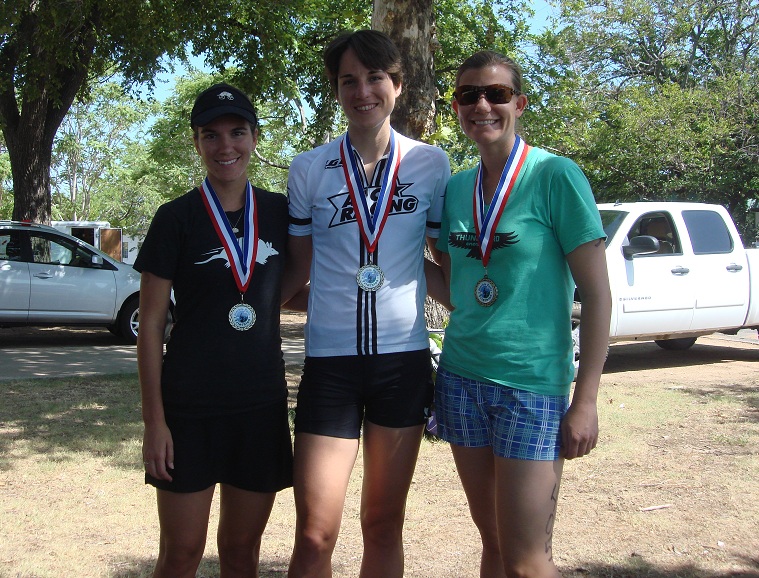
Our relay team came in first in the all-female relay division, seeing as we were the only all-female team, but we also had the best time among the mixed teams. So we got our medals and post-race barbecue feeling like we had accomplished what we had come there for, or maybe even a little more (that's what my muscles were saying, at any rate). And other ATCers took home top honors, as well - John Trowbridge was 7th overall and Master's Overall Winner, George Schmitz came in 9th overall, and Tim Dove took 2nd in the Clydesdale division.

So why run a relay? And why feel good about being passed by girls with an "R" on their calves? Because first and foremost, triathlon is about having fun, and the more people involved, the better the present and future of the sport. Besides, when the girls are on a relay team, you have an excuse – you can say you weren't fully "chicked."

Tuesday, July 5, 2011

The Cervelo S5
The Fastest Road Bike – In The World

Since 2001, when Cervelo introduced their first aerodynamic road bike, the aluminum "Solo," their aero road bike designs have been considered the industry standard. The fastest frame in the world in its day, the Solo was the first road bike with airfoil shapes specifically tuned for the speeds and wind angles cyclists experience. In 2005, Cervelo released the Soloist Carbon, which was showered with awards and rave reviews for its aerodynamic prowess, as well as its handling, stiffness, and ride quality. That design has remained relatively unchanged, with only minor tweaks and improvements through the S3, which was introduced in 2008. Despite the arrival of competitors in the aero road bike market, Cervelo held that the S3 remained top dog in the wind tunnel...until now.

This is not merely another iteration of the S3, but a completely new frame, with new features never seen before on a road bike. The S3 has been dethroned.

Overview

The S5 combines many of the best features of the P4 TT bike and the R-series lightweight bikes, giving rise to a road frame with all new geometry. The result, according to Cervelo, is a bike that has 12% better stiffness, better aerodynamics, and the comfort of the S3, and also weighs 80 grams less. At 25mph the S5 will save a rider 9 watts compared to the S3. And compared to many round-tube, non-aero frames, the S5 can save up to a whopping 32 watts at 25mph. Even in a pack, where aerodynamic drag is reduced by 25 to 30 percent, a rider would still be saving between 6 and 20 watts. Anyone who owns a power meter should be familiar with how much of an advantage that can be. But the S5 isn't just slippery, it is also stiff and light and displaying amazing handling acumen under the guidance of Thor Hushovd in the 2011 Tour de France. Stiff and light enough for 180lbs of Thor to climb the Pyrenees, nimble enough to chase climbers down on rainy descents.


New Features

  • Shielding Seat Stays - Aerodynamics and comfort +Click To Toggle Details
  • Seat Tube - Shielding the rear wheel +Click To Toggle Details
  • BBright - Stiffness and weight +Click To Toggle Details
  • Dropped Down Tube - Integrates with the fork and front wheel +Click To Toggle Details
  • Made for Water Bottles - Less penalty for carrying water +Click To Toggle Details


Specs, Pricing, Availability - Update: ATC has S5s in stock and ready to ride!

The S5 model is a bit of a departure from previous Cervelo frames in that it will be offered in 3 levels of carbon fiber. The shape and stiffness of each offering are identical, with the only change being a reduction in weight as you move up the scale. The great news is that the S5 is not just going to be an expensive superbike like the R5ca. In fact, the entry level S5 comes in cheaper than the S3. For the weight weenies and people who simply want the best, you can pay more to have your cake and eat it too. The standard and team frames will be available at Austin Tri-Cyclist starting this August with the super light VWD frames available starting in January 2012. The S5 trim levels are as follows:

Trim LevelWeight (54cm)FramesetComplete Bike 1Complete Bike 2
Standard S51,260g$3,000 USDSRAM Rival - $3,800
Team1,200g$3,800 USDUltegra - $4,800Ultegra Di2 - $6,000
VWD990g$5,900 USDSRAM Red - $7,500Dura Ace Di2 - $9000


More Info